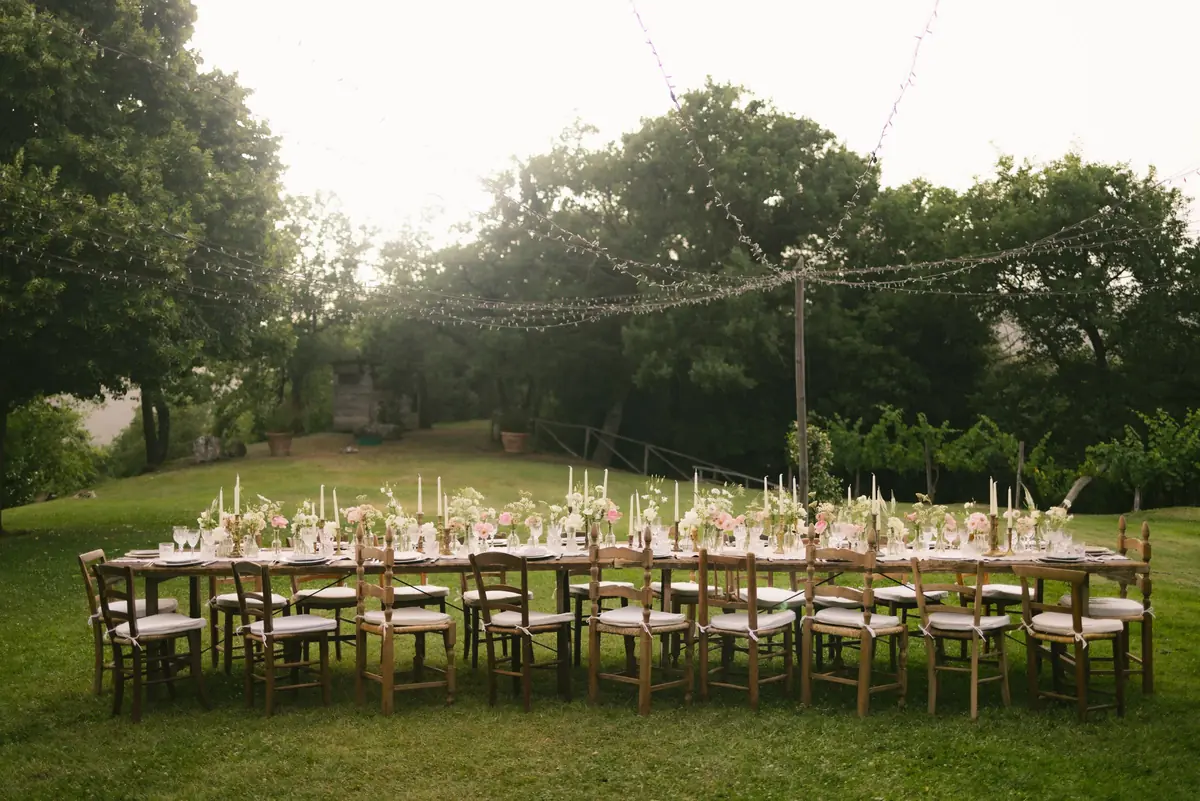
How many guests actually fit? An Italian venue capacity guide
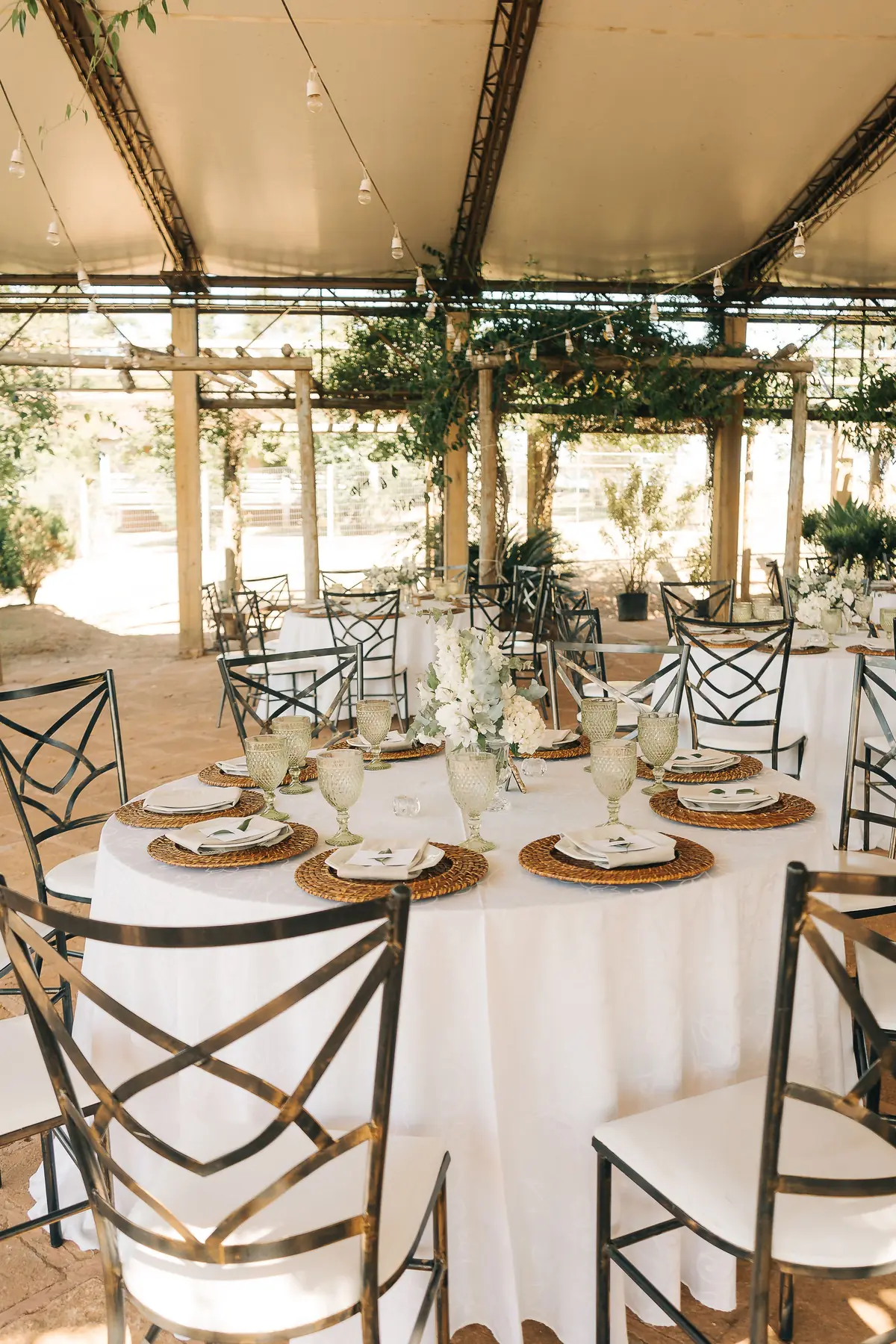
The seated number on a venue's website is the best case in perfect weather. Here is how to read it — and the rain-plan figure that matters far more, which almost nobody publishes.
Capacity is the first hard filter on any venue search and the one most often misread. A villa advertising "up to 200" may seat 200 on the lawn in June and 80 indoors in the rain, and those are very different weddings.
The four numbers you need
- Seated outdoors. The number on the website. It assumes good weather and the full garden in use.
- Seated indoors — the rain plan. Almost always smaller, often by half. This is the number that determines whether your wedding works.
- Ceremony capacity. Frequently different again, because the ceremony space is a different part of the property.
- Dancing. A room that seats 150 for dinner rarely also holds a dance floor. Ask where dancing happens and what has to be moved.
Ask for all four, in writing, before a deposit. A venue that will not put the rain-plan number in an email is telling you something.
What each kind of venue realistically holds
Vineyard estates — 40 to 120. Working wine estates are built around cellars and terraces rather than ballrooms. Wonderful up to about 120; above that you are adding structures.
Palladian villas — 100 to 250. The best large-format venues in northern Italy, because they were designed for exactly this. A frescoed hall that seats 200 with a real dance floor is not something Tuscany or the lakes can easily match.
Lagoon palazzi — up to 150, and usually far fewer. Venice is extraordinary and constrained. Everything and everyone arrives by boat, which sets a hard ceiling on guest numbers well before the room does. Under 100 is where Venice is at its best.
Lakefront villas — 50 to 180. Terraces over water, usually on a slope. Read the steps question carefully.
Hilltop castles — 60 to 250. Courtyards scale surprisingly well, and many have rooms on site so nobody drives. Often the best value at the larger end.
Countryside borghi — 60 to 200. An entire hamlet taken exclusively. The constraint is usually beds rather than seats.
The thresholds where things change
Around 30. Below this, almost everything is possible and you should be looking at places that would be absurd at scale — a private palazzo, a castle keep, a boat.
Around 120. The first real wall. Above it, the venue list shortens sharply and prices step up, because you now need a proper indoor alternative.
Around 180. The second wall. In practice this means Palladian villas, castles, or a marquee — and a marquee is €12,000–€20,000 that buys you a tent.
Above 250. Genuinely hard in northern Italy without significant structure hire. Worth deciding early whether the guest list or the venue type matters more, because you will not get both.
Two questions that are worth more than the capacity number
"What is the largest wedding you have actually hosted, and how did it go?" The advertised maximum and the comfortable maximum are different numbers, and venue managers will usually tell you the truth if you ask it this way.
"Where do 150 people stand when it rains at seven?" Not sit — stand, during the aperitivo, when the ceremony has just finished and dinner is not ready. This is the moment that goes wrong, and it is never in the brochure.
How capacity changes what you pay
Crossing a capacity threshold rarely adds cost proportionally — it adds it in steps. Above roughly 120 you are usually paying for a marquee or a second space, more staff, and often a second bar. Between 80 and 110 guests the per-head cost is at its most efficient, which is one reason so many foreign weddings land there.
Work out both numbers before you finalise the list: the budget calculator will show you what twenty more people actually costs, and what a wedding in Italy costs breaks the lines down.
The quiz filters on guest count before anything else, so the venue types it returns are ones you can actually fill. The budget calculator will show you what your number costs.