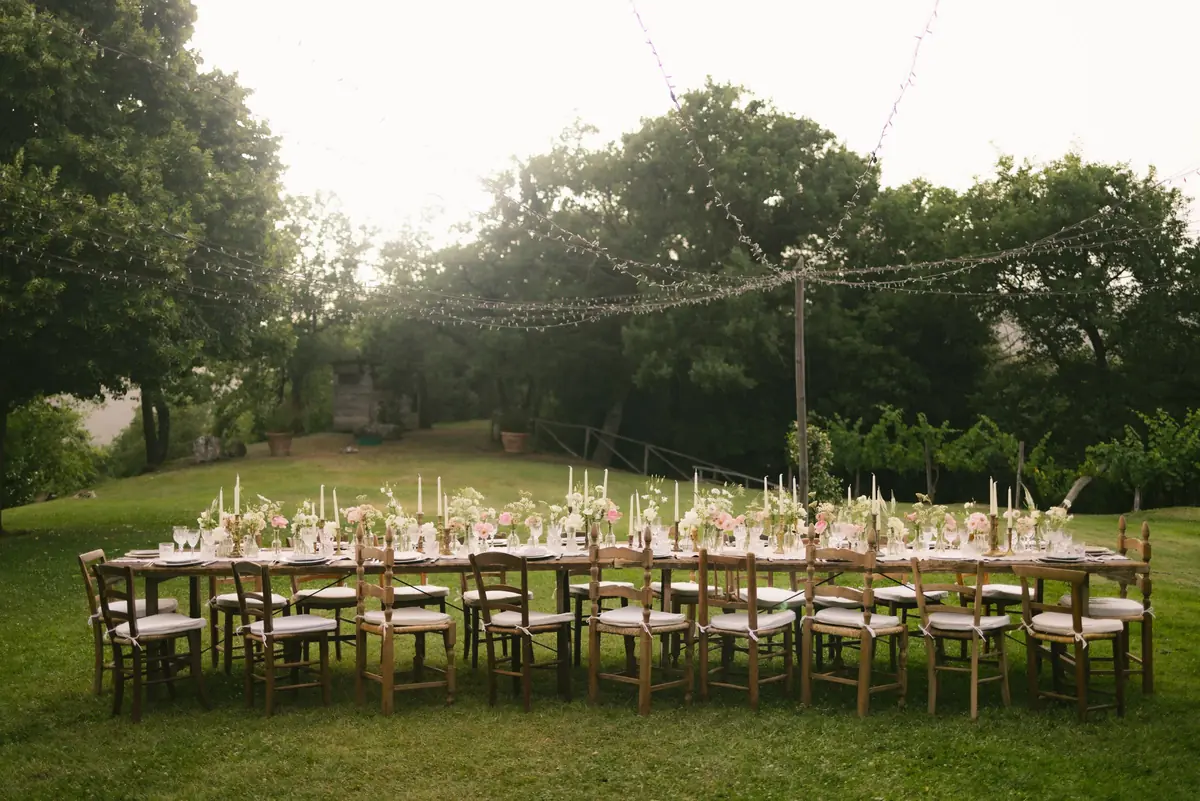
Do you need a wedding planner to get married in Italy?
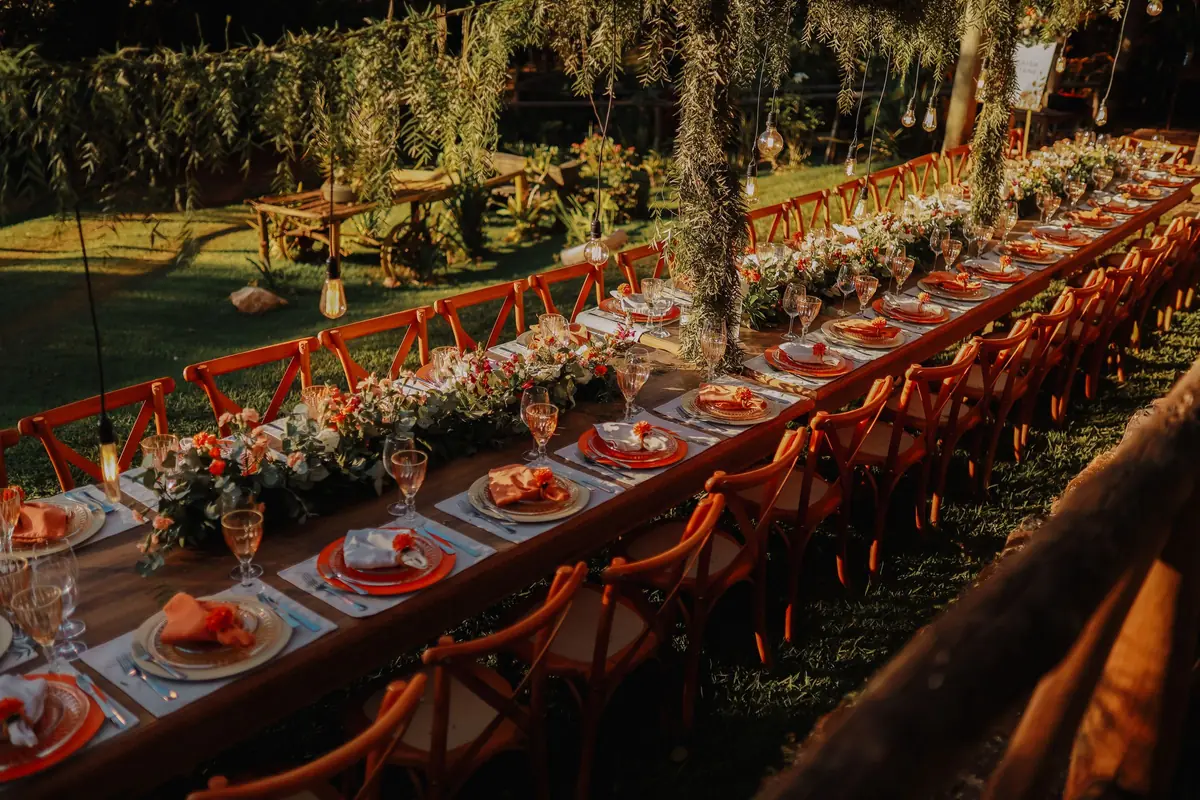
Usually not. Here is the honest version — what a planner actually does, what it costs, and the three situations where you genuinely do need one.
We do not sell wedding planning. We find venues and then we stop. So we have no particular reason to tell you that you need a planner, and no reason to tell you that you do not.
The short answer is that most couples marrying in Italy do not need a full planner, and a good number of the ones who hire one are buying coordination of a day they already know how they want to spend.
What a full planner actually does
- Finds and shortlists venues, and negotiates with them
- Sources and books every supplier — catering, flowers, music, photography, hair, transport
- Manages the budget and the payment schedule across all of them
- Handles the legal paperwork for a civil ceremony, or the church paperwork for a religious one
- Builds the timeline for the day and runs it on the day itself
- Is the person suppliers call when something goes wrong
That is a real job and the good ones are worth what they charge. The question is whether it is the job you need done.
What it costs
Full planning for a destination wedding in Italy is usually quoted either as a percentage of your total budget, commonly in the range of ten to fifteen per cent, or as a flat fee that for an international couple generally starts in five figures.
On a €40,000 wedding, a twelve per cent fee is €4,800. On an €80,000 wedding it is €9,600 — for the same number of suppliers and roughly the same number of emails. That is the part worth thinking about before you agree to a percentage.
The commission question nobody asks
Many planners receive a commission from the venues and suppliers they recommend. This is legal, it is common across the industry, and a planner who takes it is not doing anything wrong.
But it does mean a recommendation is not neutral, and you cannot tell from the outside. Ask directly: "Do you receive any commission, referral fee or discount from the venues and suppliers you recommend?" A planner who does not will answer in one sentence and be glad you asked. A planner who does will usually tell you honestly if you ask plainly. Either answer is useful; not asking is not.
The three cases where you genuinely need one
- A large wedding at a venue with no in-house coordinator. Above roughly a hundred guests, at a bare venue where you are bringing in everything, somebody has to run the logistics and it cannot be you in a wedding dress.
- A multi-day or multi-location event. Welcome dinner in one town, ceremony in another, party in a third. The complexity is not in any one day, it is in the seams between them.
- No Italian, no visit, no time. If you cannot come to Italy before the wedding, cannot take calls during Italian office hours, and have nobody who speaks the language, you are buying someone's presence, not their taste.
What most couples actually need instead
Break the job into its parts and you usually find you need two of them, not all six.
- Someone to find and verify the venue. This is the decision that costs the most and is hardest to undo, and it happens twelve to eighteen months before anything else.
- An on-the-day coordinator. A completely different and much cheaper role — someone who runs the timeline on the day itself, chases the florist and tells the band when to start.
- A photographer who knows the region. Underrated. A photographer who has worked at your venue knows where the light is at seven in the evening in September.
The on-the-day coordinator
This is the role couples most often skip and most often regret skipping. It is not full planning — they arrive a week or two before, take over your plan, and execute it. Many Italian venues include one, or have one they always work with, and the fee is a fraction of full planning.
Ask your venue whether they have a coordinator, whether they are included, and what exactly they do. "We have staff on site" is not the same thing as somebody whose job is your timeline.
How to tell a good planner from an expensive one
- Ask for a flat fee, not a percentage. If they will only work on percentage, ask what changes about their work when your budget goes up.
- Ask who is physically on site on the day, by name. At some agencies it is not the person selling to you.
- Ask for the contract before the deposit, and read the cancellation clause in both directions.
- Ask how many weddings they run in your month. A planner running twelve weddings in September is running a production line.
- Ask about commission, as above.
And if the honest answer for you is that you want somebody to take the whole thing away, hire a good planner and stop reading articles like this one. That is a legitimate thing to buy. It is just not the only thing on sale, and it is frequently sold to people who came in asking for something much smaller.